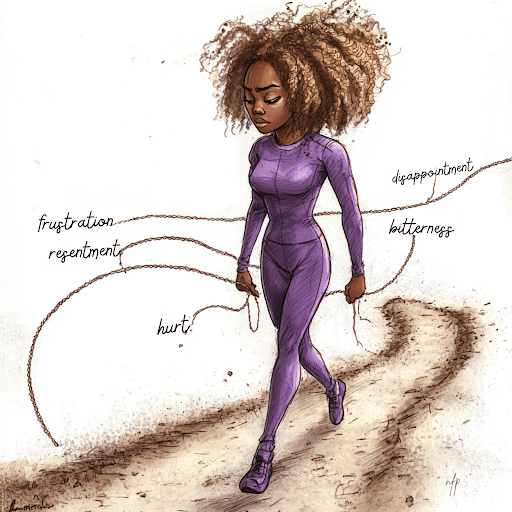
Why “Broken” Doesn’t Sit Right With Me
I have been thinking a lot lately about the difference between being flawed versus broken after hearing the words used often and interchangeably to describe people. I don’t think they are the same.
I can say I am flawed without hesitation, but I have a harder time saying, “I am broken.” Something about making broken a statement about who I am doesn’t sit right with me.
Being flawed is something I can accept in myself.
I have my flaws, I’ve made mistakes and had to apologize afterwards.
There have been things I didn’t realize in myself until someone brought it to my attention, or God convicted me of it.
There have been things in my life I thought were right, that I’ve had to change my mind about.
This is part of being human, right?
Being broken, on the other hand, seems to me to be more like something that doesn’t work anymore.
Depending on how badly something is broken, we might decide to throw it away altogether.
When I hear the word broken being used to describe people, I know people are usually talking about the brokenness of humanity.
They may be speaking about sin, or suffering, or the fact that we are not perfect.
I completely agree with that, but I don’t think it’s always the best word to use.
I know the Bible is clear about sin, and it doesn’t soften what sin does to us. But when it speaks of brokenness, it’s usually describing a heart that is grieving or repenting, not handing us a name to live under.
There are things we need to change in ourselves, and there are things in ourselves that we hurt others with, not just what they hurt us with.
I think we can be honest and admit we are not perfect without making that the whole truth about us.
What Genesis Actually Says About Who We Are
When I started thinking about this, I thought about Genesis, because God created man, and we know we were made in His image (Genesis 1:27).
After sin entered the equation, our condition changed, not our identity.
We see how it affects humanity immediately after that in Genesis 3, and throughout the rest of Scripture.
What I realized when I was thinking about this is that after sin, Scripture still refers to man as being made in the image of God.
In Genesis 9:6, Scripture talks about how we shouldn’t murder because we are made in God’s image, and James 3:9 talks about not cursing people because we are made in the same way.
There is definitely something to be said about our brokenness as humans, but I don’t think it should overshadow the fact that we’re still made in God’s image.
The Difference Between Flawed and Broken
Perhaps that is why I think the word flawed is better for me to use when referring to myself.
There are things I consider to be flaws, without putting the whole person in the category of being broken.
If something in my character needs to change, it can be addressed.
If I’ve gotten into the habit of doing something that hurts myself or someone else, I can call it what it is and work on changing.
The same can be said about times I’ve sinned, or done things wrong in my life.
When I think about being broken, it seems like it’s a bigger label that covers too much.
To me, it’s saying the whole person is not right.
How One Failure Becomes a Whole Identity
I think when we get into a cycle of failing at something, we begin to think we’re not able to do well at anything.
When someone fails us, we begin to expect everyone to fail us.
When one relationship doesn’t work out, we think it’s because we are bad at relationships.
I know some people who think this way, and I understand how someone gets there.
I think it’s really important to recognize when things go wrong in our lives, and how they affect us.
It would be foolish of me to try to pretend like I am never failing, and never experiencing grief or loss, etc.
It is important to identify what is happening to us, and how we should move from there.
If I didn’t handle something right, I need to be able to say that and move forward in a positive way.
If I need to apologize, I should do that.
If I need to change a habit, I need to do that, and if I need to evaluate why my reaction was wrong to begin with, I need to do that, with the help of God.
I don’t think simply labeling myself as broken accomplishes that.
If anything, I think thinking of myself as broken prevents me from moving forward in a helpful way.
If I was thinking of myself as broken, what exactly would that mean?
Am I grieving something?
Am I afraid?
Is there something I hate that I can’t move past?
Did I learn something wrong about myself years ago that leads me to think badly about everything?
Have I fallen into a habit I need to get out of?
Have I hurt someone and need to apologize?
There are a lot of different issues that come up individually.
I would rather identify what is wrong instead of putting all of it in the category of “I’m broken.”
What It Means to Call Myself Flawed
I also don’t think it means that I think less of myself when I say I am flawed. It’s quite the opposite actually.
When I say I am flawed, I am being honest with myself, and I am able to identify the things God has done well in me, or the ways He has blessed me.
I can admit the things I’ve done right without thinking badly about myself.
I think I can be honest about the things in myself that have grown over the years, and I can admit there may be some things I have yet to grow in.
Both can be true, and I think we sometimes have trouble doing both at once.
We have to either think we’ve done everything right, or we’ve done everything wrong.
When we think about ourselves, we should be able to admit both.
We are flawed human beings who make mistakes and then learn from them, and we are wonderful people made in the image of God.
It’s freeing to be able to say “I was wrong about this” without putting that label on the whole person, so that we can find the best way to change.
I think this is where the difference in the two words I’ve been talking about comes in.
“Flawed” gives me something to change, something to work on, but not a whole identity label to put on myself.
“Broken,” to me, seems like the whole person has already been thrown away, and it’s not really possible to change anything.
That is what I think about when I hear people refer to themselves or others as broken, and I think they should be using the word “flawed” instead.
When I hear the word “flawed,” I immediately think of “I made a mistake somewhere.”
I think of the times I’ve messed up, and what I need to do about them, but I don’t think I am “broken” in any way.
There are things in my character that God has already addressed, things He is currently addressing, and things I don’t realize yet.
I think I can take this label on, this word “flawed,” because I can accept it.
I don’t think a “flaw” gets the final say about me as a person, so I can take it on.
That is why I think I can accept the word.
When I hear the words “flawed” and “broken” used to describe people, it makes me think of the differences stated above.
I can say I am flawed and move on, but I don’t think I am broken.
The Word Broken Is Not Your Identity
I know that the word broken is a biblical word, so I don’t want to imply that there is some unbiblical connotation to the word. Scripture speaks of the brokenhearted, a broken and contrite heart, broken strength and various other forms of brokenness. It speaks of things that are broken, the condition of being broken or broken in. There are passages where brokenness is used to describe grief, mourning, humility, repentance or loss.
That’s not what I am talking about.
What I wonder is about the implications of taking that word and making it a statement of who we are. I see a difference, at least in my own life, between recognizing the broken parts of my life and making the claim that I am broken and wearing it as an identity badge.
Let me say it another way.
One acknowledges something that may need healing, attention or restoration. The other can become the way I see myself.
Let me put it like this…
The word broken is an adjective, not someone’s identity in Christ.
I invite you to check out my latest devotional for Christian women, Cracked but Carried: When You’re Mentally & Emotionally Tired But Still Believing God (30-Day Devotional)