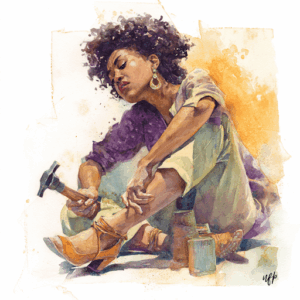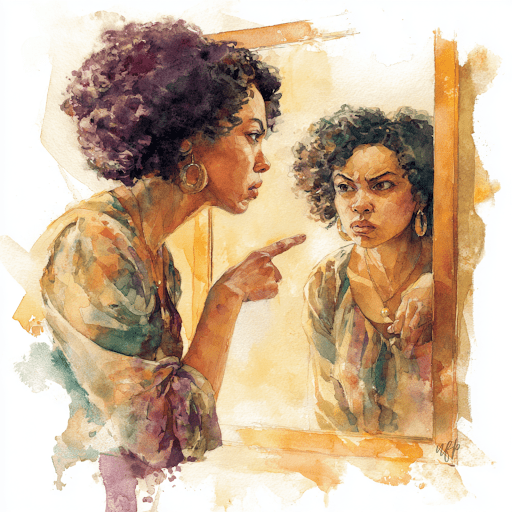
Do you ever feel like your own worst enemy?
Like no matter what you accomplish, it’s never “enough”?
That voice in your head that should be your cheerleader has turned into a relentless critic, tearing down every effort?
If you’ve ever battled with that harsh inner dialogue, you know how exhausting it can be. Self-criticism often hides behind high standards, perfectionism, or even what we call humility. But at its core, it’s a quiet drain on your confidence, peace, and sense of purpose.
The Bible tells us in Proverbs 18:21 that “The tongue has the power of life and death…”—but what if the tongue that’s hurting you is your own?
Today, we’re exploring where self-criticism comes from, how it hides behind high standards or “humility,” and what the Bible says about overcoming it. Because the truth is: God doesn’t speak to you like your inner critic does. It’s time to break the cycle.
What Is Self-Criticism (Really)?
Self-criticism goes beyond self-awareness or healthy self-reflection. It’s the act of harshly judging yourself, often with unrealistic expectations, and it’s usually accompanied by shame and guilt.
Common Signs of Self-Criticism:
- You replay mistakes in your head for days or weeks
- You downplay compliments or achievements
- You’re more patient with others than with yourself
- You think being hard on yourself is “motivating”
- You fear failure not just because of the outcome but because of what you’ll say to yourself afterward
At its root, self-criticism is a form of internalized rejection—often from childhood, trauma, church hurt, or social pressures. But God didn’t create us to live under constant mental punishment.
What the Bible Says About Self-Criticism
Scripture doesn’t use the term “self-criticism,” but it speaks clearly about how we should think about ourselves.
1. Godly Conviction vs. Self-Criticism
- Conviction is Holy Spirit-led and produces change.
- Self-criticism is fear-led and produces shame or condemnation.
“Therefore, there is now no condemnation for those who are in Christ Jesus.” — Romans 8:1
Self-criticism keeps you in condemnation, even after you’ve repented or corrected the mistake.
2. Your Identity Is Not in Your Performance
“For we are God’s masterpiece. He has created us anew in Christ Jesus, so we can do the good things He planned for us long ago.” — Ephesians 2:10
A masterpiece doesn’t critique itself. It reflects the creativity of its Creator.
3. You Can Renew the Way You Think About Yourself
“Do not conform to the pattern of this world, but be transformed by the renewing of your mind.” — Romans 12:2
God invites us to take part in a mental reset…a spiritual detox that includes how we talk to and about ourselves.
Roots of Self-Criticism
Self-criticism often stems from:
- Childhood experiences (overly critical caregivers, performance-based love)
- Perfectionism
- Comparison culture (especially on social media)
- Internalized shame
It becomes a survival mechanism: “If I beat myself up first, others can’t hurt me.” But in reality, it creates chronic anxiety, procrastination, and emotional exhaustion.
How Self-Criticism Affects Your Faith, Relationships, and Calling
Self-criticism is a mindset issue. It impacts how we show up in life.
Spiritually:
- We struggle to receive grace.
- We avoid prayer or worship when we feel we’ve messed up.
- We assume God is disappointed with us (even when we’re doing our best).
Relationally:
- We get defensive or overly apologetic.
- We expect rejection, even in healthy relationships.
- We become overly critical of others (because we project our inner lens onto them).
In Your Calling:
- We procrastinate or avoid taking bold steps.
- We minimize our gifts.
- We stay silent out of fear of saying the “wrong” thing.
Healing the Inner Critic: A 5-Step Spiritual + Practical Process
1. Name the Voice
Who does the inner critic sound like? A parent? A teacher? Your own perfectionist self? Naming it helps you disempower it.
2. Invite God Into the Dialogue
When the voice starts talking, pause and ask: “Lord, is this You, or is this fear?”
God may correct but He doesn’t condemn. “My sheep hear my voice…” — John 10:27
3. Replace Lies with Truth
Write down 3–5 common self-critical thoughts and find Scripture that directly counters them. For example:
Lie: “I’m such a failure.”
Truth: “Though the righteous fall seven times, they rise again.” — Proverbs 24:16
4. Speak to Yourself with Compassion
Talk to yourself like you would to a close friend or a child. Would you tell them, “You’re pathetic”? No. So why say it to yourself? Self-Talk is an amazing tool.
5. Practice Soul-Care, Not Just Self-Care
Self-care is great. But soul-care includes:
- Prayer and journaling
- Resting without guilt
- Biblical affirmations
- Letting people love and support you
Grow through It
- When you make a mistake, what is the first thing you say to yourself?
- What would change in your life if your inner voice started sounding more like Jesus?
You were never called to live under the weight of your own judgment. The same grace you freely give to others is available for you, too. Jesus didn’t just die for your sins. He died to set you free from shame and self-condemnation.
This week, may you begin to see yourself the way God sees you, loved, growing, and worth grace.
Ready to quiet your inner critic and grow your inner peace?
Download my free resource: 5 Day devotional, Cracked But Carried: When You’re Mentally & Emotionally TIRED.—a 5-day journey to help you walk through life’s pressures with God’s peace.