7 Reasons Why It’s Tiring
There’s a woman I once worked with who could tell what kind of evening she was going to have before her husband even spoke.
If the front door closed a little harder than usual, she adjusted.
If his footsteps were heavier, she recalibrated.
If he was quiet at dinner, she immediately began scanning for what she might have done wrong.
She did not call this emotional management. She called it being wise. Being supportive. Keeping peace.
By the end of most days, she was tired. Not physically tired. Emotionally depleted.
When I asked her what she had done that day, she listed ordinary tasks. Work. Dinner. A few emails. A phone call with her sister.
But what she had actually done all day was monitor, anticipate, adjust, soften, and stabilize someone else’s emotional state.
That kind of labor is invisible. And it is exhausting.
Many Christian women have been taught to be patient, understanding, and slow to anger. Those are beautiful qualities. However, somewhere along the way, patience turned into emotional over-functioning.
There is a difference between loving someone and managing them.
Let’s talk about why managing someone else’s emotions drains you so deeply.
1. You Were Never Designed to Be Someone’s Emotional Regulator
Every adult is responsible for the stewardship of their own heart. Scripture reminds us in Galatians 5:22–23 that self-control is fruit of the Spirit. That fruit grows within a person. It cannot be outsourced to a spouse, friend, or partner.
Support is biblical. Compassion is biblical. Encouragement is biblical. Emotional regulation on behalf of another adult is not.
When you step into the role of regulator, you begin carrying emotional weight that was never assigned to you. Over time, your spirit feels that misalignment.
2. It Keeps Your Body in a Constant State of Alert
When you are responsible for someone else’s emotional temperature, you live in subtle anticipation. You listen more carefully. You analyze tone more closely. You measure your words before speaking.
That constant scanning keeps your body in tension. Your shoulders tighten. Your stomach remains unsettled. Your sleep becomes lighter than it used to be.
You may describe it as “just being careful,” but your body recognizes it as stress. Chronic emotional monitoring keeps you from fully resting in your own space.
3. It Slowly Replaces Partnership With Parenting
Healthy relationships are built on mutual responsibility. Two adults. Two emotional lives. Two people capable of reflection and repair.
When one person becomes responsible for maintaining stability, the dynamic shifts. You stop relating as equals and begin buffering reactions, smoothing conversations, and preventing escalations.
That is not partnership. That is emotional parenting.
And emotional parenting in adult relationships eventually erodes intimacy.
4. You Begin Silencing Your Own Feelings
At first, it feels small. You decide to wait for a better time to bring something up. You soften your truth to avoid triggering a reaction. You tell yourself it is not worth the tension.
Over time, this becomes a pattern. Your feelings are edited before they are expressed. Your needs are postponed. Your concerns are minimized.
When someone else’s emotions dominate the relational space, your emotional presence gradually shrinks.
That is where exhaustion turns into invisibility.
5. You Internalize Responsibility for Peace
Many women quietly assume that if conflict arises, they must not have handled it correctly. If tension lingers, they must not have communicated gently enough.
Romans 12:18 says, “If possible, so far as it depends on you, live peaceably with all.” That verse contains wisdom and boundaries at the same time. It acknowledges that peace involves your effort, but it does not assign you total responsibility for someone else’s reactions.
Peace sustained by one person’s emotional performance is fragile. True peace requires maturity and accountability on both sides.
6. It Becomes Invisible Emotional Labor
Managing someone else’s feelings requires constant internal work. You anticipate reactions. You soften truths. You absorb frustration. You prevent escalation. You provide reassurance.
Rarely is that labor acknowledged. There is no applause for it. No recognition. Just quiet depletion.
Resentment often grows in the soil of unacknowledged labor. And resentment is usually a signal that something is out of balance.
7. It Delays Their Growth
This may be the most difficult truth. When you consistently absorb or buffer someone else’s reactions, you remove the very discomfort that might lead them to maturity.
Growth often begins when a person sits with their own emotional response and asks why it surfaced.
If you cushion every reaction and soften every consequence, they may never develop the capacity to regulate themselves.
Sometimes love looks like stepping back and allowing another adult to steward their own heart.
What Shift Needs to Happen?
The shift is from emotional management to emotional boundaries.
You can offer empathy without ownership.
You can speak truth without rehearsing it for hours.
You can allow discomfort without fixing it.
You can let another adult carry their own internal process.
That shift may feel unfamiliar at first, especially if you have been the stabilizer for years. But emotional health is not sustained through constant self-sacrifice.
Grow Through It
Reflect on this gently:
• Where have I assumed responsibility for emotions that are not mine?
• What have I avoided saying in order to prevent someone else’s reaction?
You are called to love deeply. You are not called to manage another adult’s internal world.
And there is freedom in remembering that.
Dr. Nanette Floyd Patterson, LCMHC Christian Therapist | Master HIScoach™
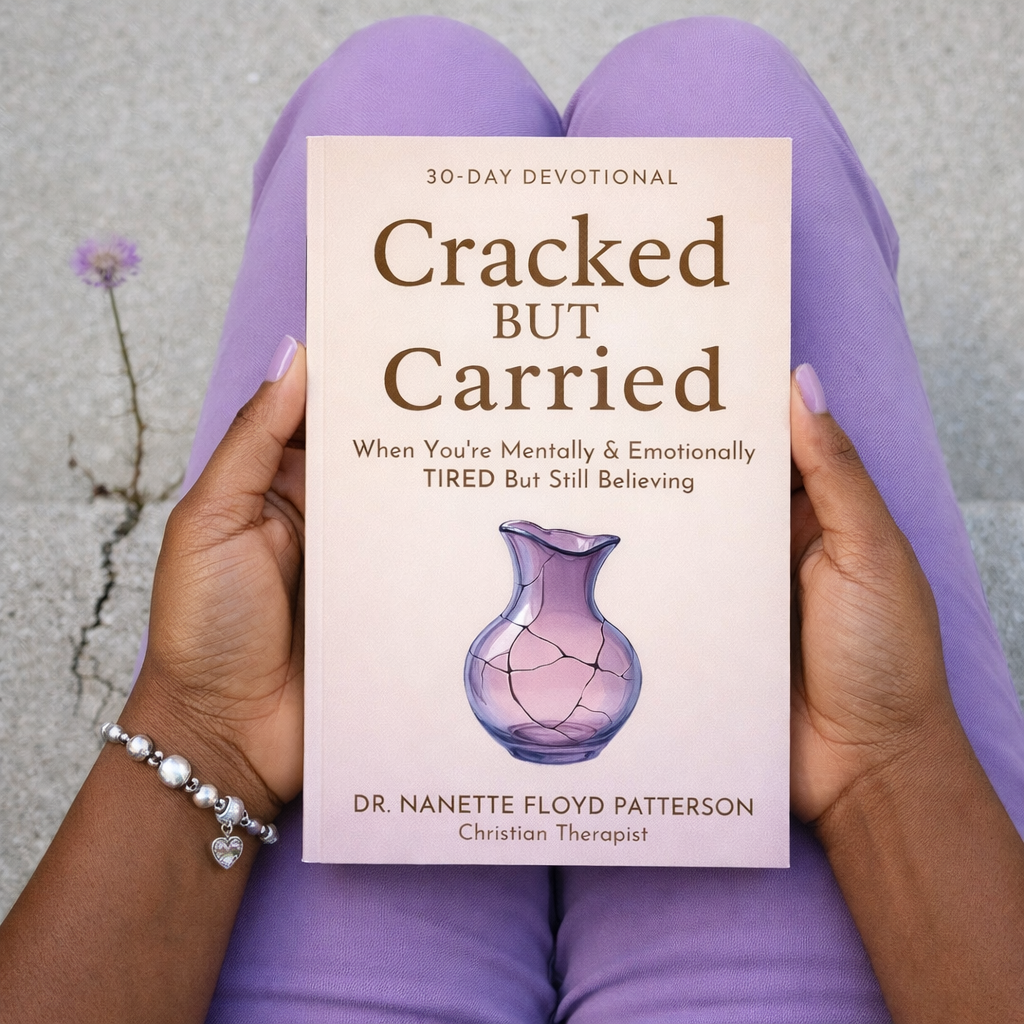
Faithful… But Still Tired?
If you’re steady in your walk with God yet weary from carrying more than your share, my devotional Cracked But Carried (Digital Available) was written for this season. It speaks to the woman who keeps showing up for others while quietly running low.